
How to Use a Buddha Statue for Home Vastu to Attract Peace and Positivity
The wish to have peaceful and favorable conditions at home is universal. We are trying to find places that revive our soul and protect us against the pressures of the external world. The Vastu Shastra science of ancient India has been providing us with these principles of balancing our living environments to the natural energies over centuries. In this context, this addition of a Buddha statue for home vastu can be an effective trigger in turning your home into a temple of serenity.
Vastu Shastra is a belief that has its literal meaning as the science of architecture founded on the principle of directional balances and circulation of the five elements (earth, water, fire, air, and space). Placing a Buddha sculpture is not a whimsical gesture; it is an object that signifies calmness, enlightenment, and conscious existence. When correctly placed in Vastu, the statue is able to direct good vibrations, counter adverse energy, and create the ambiance of accord, which is the state of the enlightened one.
Learning of the Various Buddha Sanskarsas in Vastu
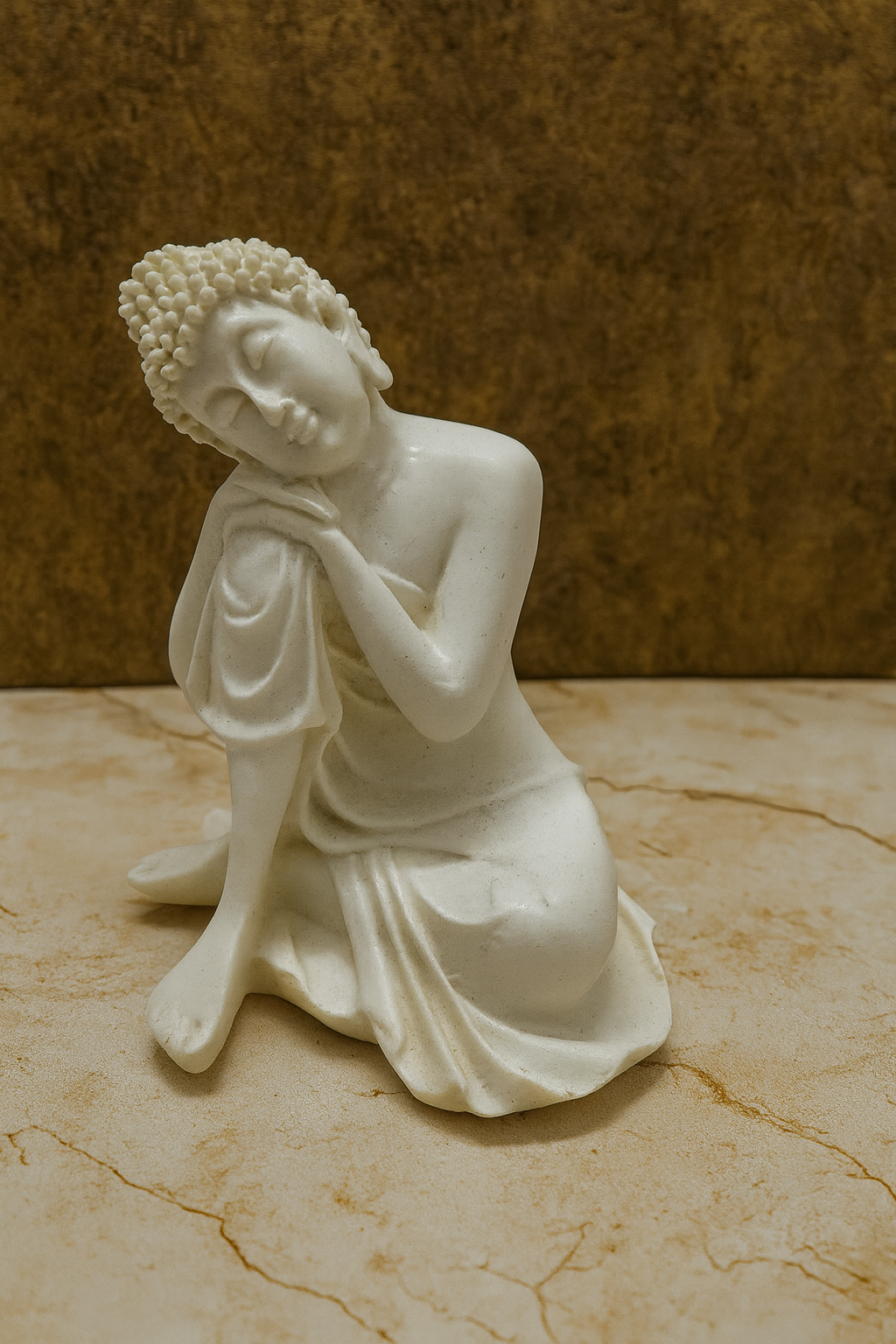
It is important to note that various poses, or mudras, of the Buddha signify different things, and therefore they should be placed in various sections of the home depending on the Vastu.
1. Meditating Buddha (Dhyana Mudra): It is one of the most widespread images, where the hands are placed in the lap with palms upwards indicating an act of focus and achievement of spiritual perfection. The Meditating Buddha would suit perfectly well in places where you want to have silent reflections and tranquil thoughts.
2. Laughing Buddha Hotei: this character is based on a Chinese monk called Budai, and it is attributed to the Buddha and is commonly used in Vastu and Feng Shui. His sit position, which is a smiling face, and a big belly, is a sign of wealth, happiness, and plenty.
3. Earth Touching Buddha (Bhumisparsha Mudra): In this posture the hand (the right hand) is stretched down to touch the ground as a sign that the moment of enlightenment of Siddhartha Gautama had arrived and he called upon the Earth to bear a witness to his discovery.
4. Protection Buddha (Abhaya Mudra): This mudra means fearlessness, protection, and peace as the palm is raised, facing outwards, with the right hand. The positioning of this Buddha is aimed at driving away bad energy and bringing in a feeling of safety within the house.
Vastu Rules in the placement of Buddha Statue
The effectiveness of the Buddha statue for home vastu is the proper direction of the statue. Even a beautiful statue that is misplaced, in that case, is not capable of all its positive energies.
1. The Living Room (For Peace and Protection): The perfect position of the Meditating or Protection Buddha is to the main door although not directly facing it. It is said to receive the incoming energy and convert the same into positive vibrations and only then passes to the rest of the home. It is highly advisable to place the statue in the Vastu direction of knowledge and spiritual development which is the North-East of the living room.
2. The Garden (The Serenity and Calm): a serene Meditating Buddha is superb to have in the garden or an open area. It can be placed in the East, the direction of new dawn and of the sun rising, so as to add to this feeling of tranquility and of natural harmony. When placing a large statue outside, the same rule should be followed keeping the surrounding clean and bright as a room would be.
3. The Study or Home Office (To Be Clear and Focused): The Earth Touching Buddha is a good option to a study or office. Setting it on a desk or a shelf in the North East or East direction may allow you to think clearly, wisely and assist in concentration, so that you are able to pursue your goals with confidence.
4. Areas to Avoid (Respect and Energy Flow): Vastu strictly suggests that a Buddha statue should not be located in low energy or lack of respect. Do not put the statue in the bathroom, in the laundry room, or in the storeroom. Directly on the floor it should not be put. It should not be next to a staircase or a wall of a toilet. One should also not keep the statue in bedrooms because Vastu principles do not include that space to be used to contemplate the spiritual realm.
Balancing Your House with the Power of Buddha
The insertion of a statue of the Buddha as a home vastu is a willful practice. The statue provides a reminder in the form of a constant and soft message of the ideals of inner peace, compassion, and the seeking of enlightenment.
The space around the statue must be clear to allow maximum circulation of the positive prana (life force). You can also increase the spiritual power by putting a small lamp or a stick of incense close to it but safely. The statue of the Buddha fosters mindfulness, and this implies that each member of the household tries his/her best to have a peaceful and positive interaction.
We, at DecorSip, are convinced in combining the ancient knowledge and the modern beauty to produce significant decorations in homes. We have also compiled our Buddha statues collection that will help you balance your space in the Vastu philosophy, adding long-term goodness and good energy to your house.
Frequently Asked Questions
In what position should a statue of Buddha in the living room face?
Is it advisable to have the Buddha statue facing the door?
Does the Laughing Buddha make a good house Vastu?
Is it possible to have a Buddha statue on the floor?
What does the meditating Buddha mean?
Related Posts

Aromatherapy Incense for Meditation: Enhance Focus, Calm, and Spiritual Balance

Watering Can Planter: A Rustic Decor Idea Every Plant Lover Needs